
We gave an AI model a planning brief and asked for a month of social content. The brief described a bakery we invented for the test: two staff, a lunch rush, three posts a week, a town with a Saturday market. We wanted to know how much of a real planning job a model does before a person has to take over.
The short version: it filled the grid in under a minute, about half the ideas were usable, and every idea that made the final calendar still needed a person to make it true. The long version follows, with the prompt, so you can run the same test on your own business.
The test
The prompt used the structure from our prompts guide: context, constraints, one ask. We gave it the posting jobs we give real calendars, answer a question, show the work, be human. We gave it the cadence, the staff count, the market day. Then: draft a four-week grid of post ideas, one line each.
We ran the same prompt three times to see how much the answers varied, and scored every idea three ways: usable as written, usable after editing, binned.
One line on method: we scored ideas rather than captions, because the calendar stage is ideas. Caption writing is a different job with its own rules, and our prompts guide covers it.
The brief, word for word
Here is the brief, complete: You plan social content for a bakery with two staff and a lunch rush, in a market town with a Saturday market. Three posts a week. Each post does one job: answer a question customers ask, show the work, or be human. Draft a four-week grid of post ideas, one line each, labelled by job.
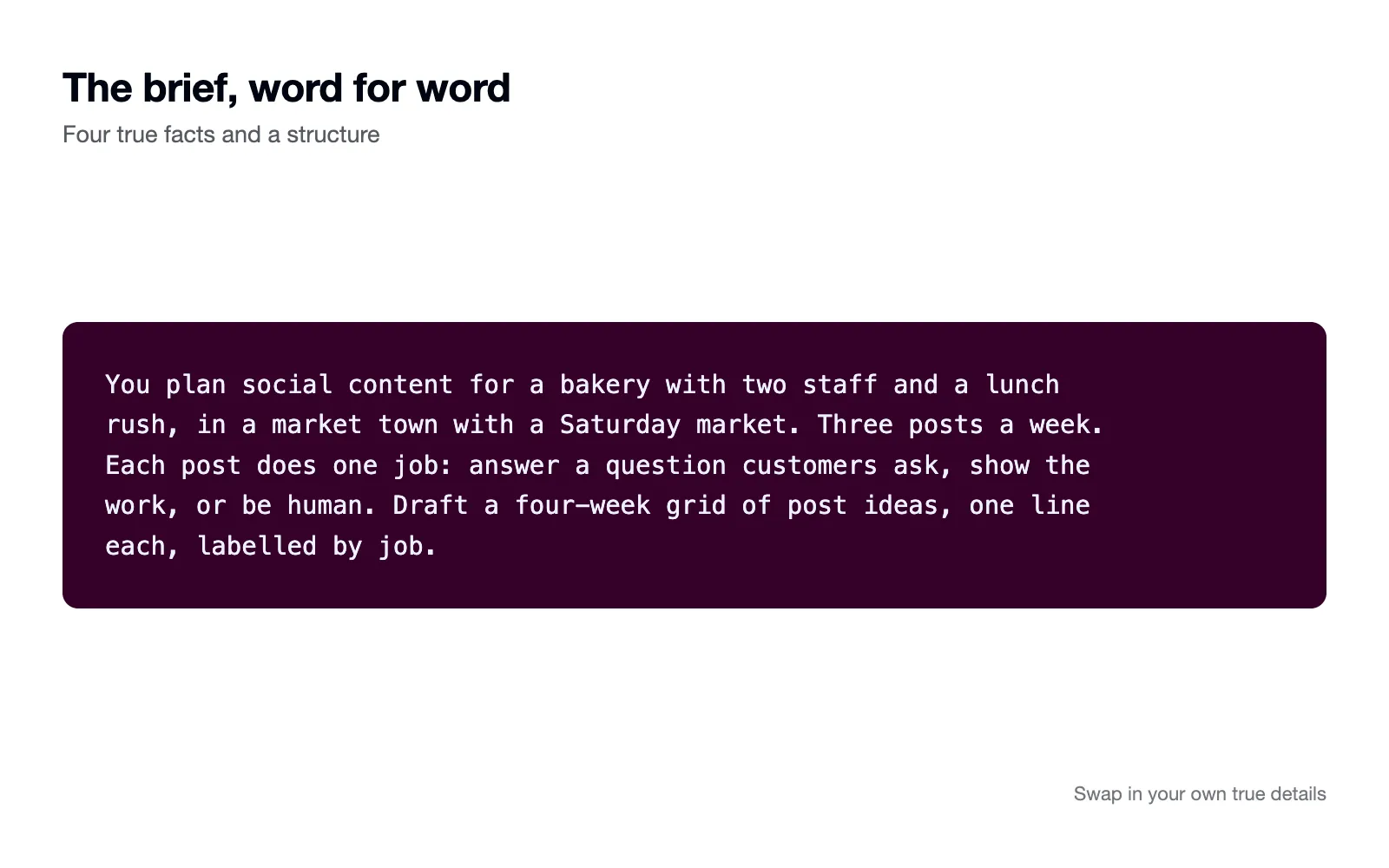
Notice what it contains: four true facts and a structure. Everything the model did well came from the structure, and everything it invented lived outside the four facts. That ratio drives everything below.
The invented bakery matters, by the way. We test on a fictional shop so we can publish the results without dressing a client's month up as a case study, and because the failures show either way: a model that invents specials for a fake bakery invents them for a real one too.
What the model got right
Structure, completely. It respected the jobs, never missed a slot, and spread the topics across the weeks. A blank month became a reviewable draft in less time than it takes to open a spreadsheet, and vetoing a bad idea is faster than producing a good one. That trade is the real saving.
The middle of the quality range was genuinely fine. Show the first tray coming out of the oven. Answer why sourdough costs more than supermarket bread. Post the counter at 6am before the doors open. Ordinary ideas, but ordinary ideas are what a busy owner forgets to make, and the model never forgets.
The scale of this is not niche. HubSpot's State of Marketing 2026 found 94% of marketers planning to use AI for content, and planning is the cleanest place for it, because a plan reaches no customers. Every generated word gets a human pass before anyone sees it, by design.
Where it fell over
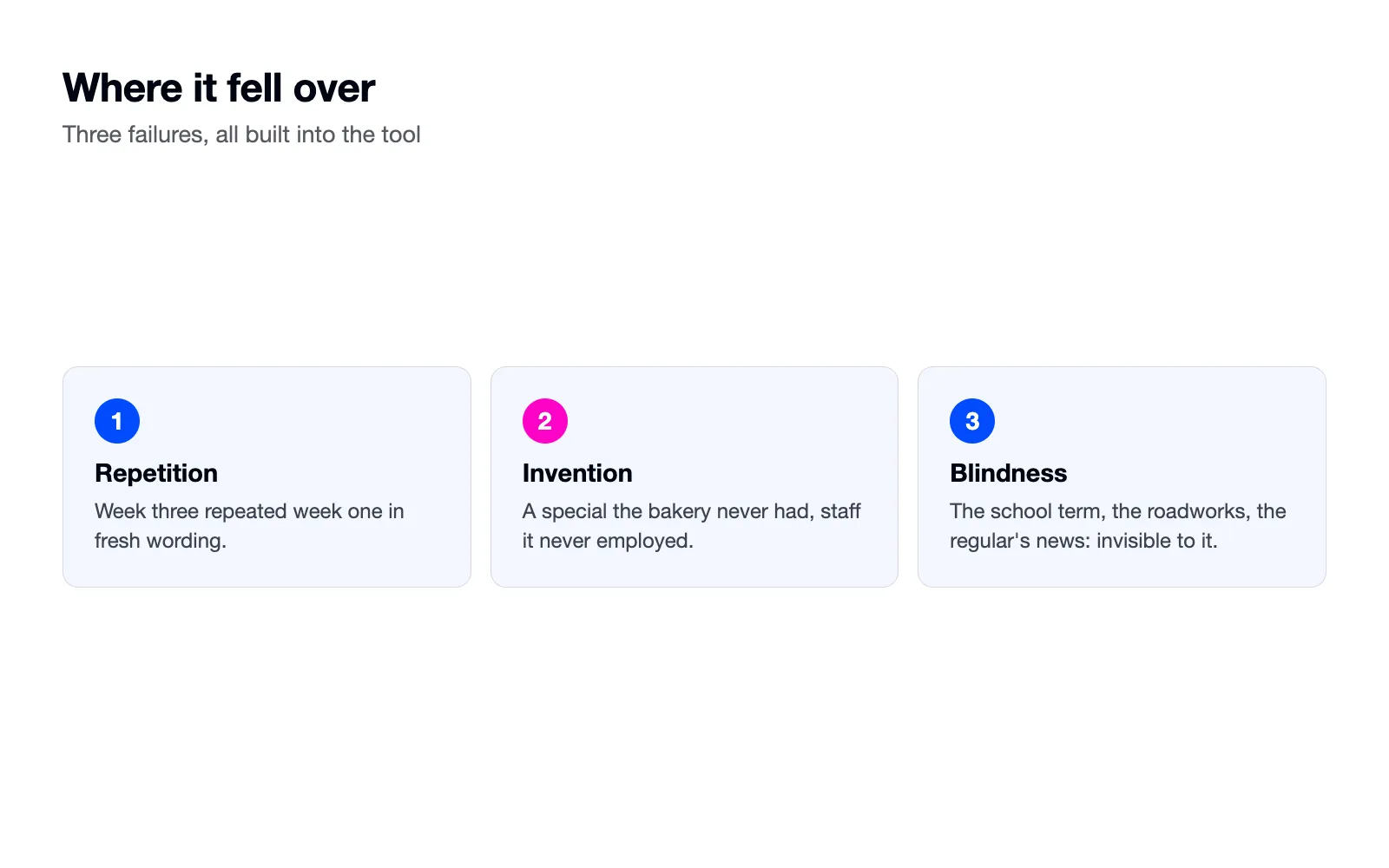
Repetition, first. By week three the grid repeated week one with fresh wording: the 6am counter shot came back as the quiet before opening, and the sourdough price answer returned dressed as a myth-busting post. Three runs of the prompt produced the same month three times in different clothes.
Invention, second, and this is the one to watch. The model gave our bakery a seasonal special it never had, staff it never employed, and a meet the team week that a two-person shop cannot fill. It does not know your stock, your people or your prices, so it fills the gaps with plausible fiction, stated as confidently as everything else.
Blindness to the actual month, third. It used the Saturday market because we typed it, and nothing else, because it knows nothing else. The school term, the roadworks outside, the regular who just had a baby, the wet forecast that empties the high street: the things that make a month yours are exactly the things no model can see.
And every idea arrived in the same cheerful register, which matters less at the idea stage, but it previews what happens if you let the same model write the captions unedited.
A fatter brief fixed half of it
We ran the test again with a longer brief: the bestseller, the price of a loaf, the opening hours, the fact there is no delivery. The invention dropped sharply, because the model reached for real details instead of imagining some, and the repetition eased because it had more to combine. The rule that came out of it: every true detail you add replaces a fiction you would otherwise have to catch.
How the work split
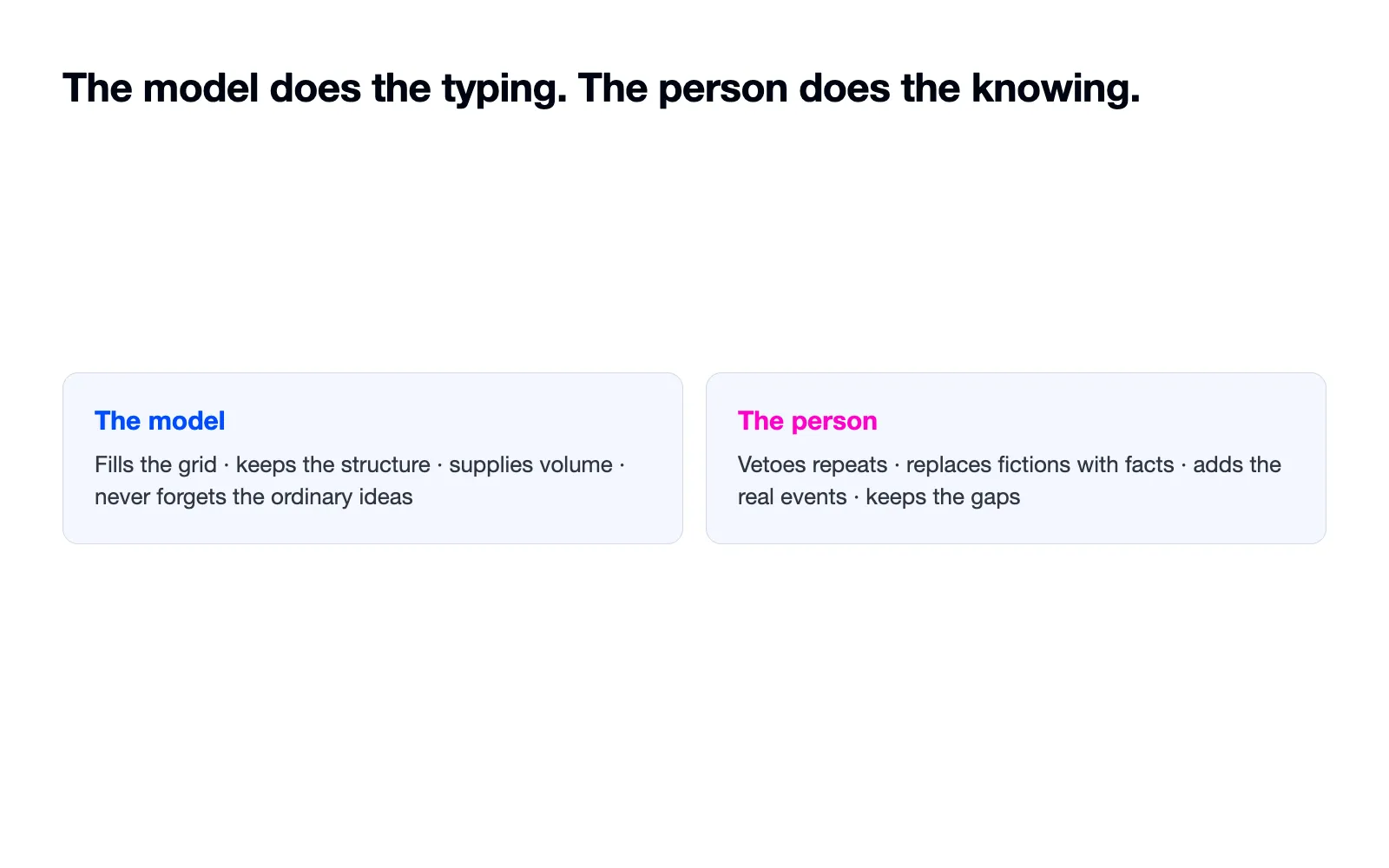
The model does the typing. The person does the knowing. It fills the grid, keeps the structure and supplies volume. You veto the repeats, replace every invented fact with a real one, add the events only you know about, and keep the empty slots our calendar guide argues for.
The planning hour did not disappear in our test. It changed shape. Reading the numbers and collecting real events still took their minutes, and the grid-filling stretch shrank to an editing pass. Editing a wrong plan is faster than staring at an empty one, and that difference is the entire case for the tool.
The two jobs we kept human
Reading last month's numbers stayed ours, because deciding what worked is judgment about your own audience, and the model has never met them. So did choosing the gaps, the slots left deliberately empty for the month's real events. A model fills space by nature, and the gaps are the part of the plan that makes room for life.
The AI buttons inside other tools
Schedulers and platform tools now ship their own AI planners and caption writers, and the same rule covers all of them: drafts, not publishers. A tool that fills a calendar is doing the safe half of the job. A tool that posts unreviewed text is publishing fiction under your name, and no feature list makes that trade good.
Whatever tool holds the grid, the veto pass stays yours. The model's month and your month only match after you have made them match.
Run the same test
Copy the shape: describe your business in three or four true details, name your posting jobs and cadence, add the constraint block from our prompts guide, and ask for a four-week grid of one-line ideas. Then do the veto pass: strike the repeats, correct every invented fact, and insert the real month.
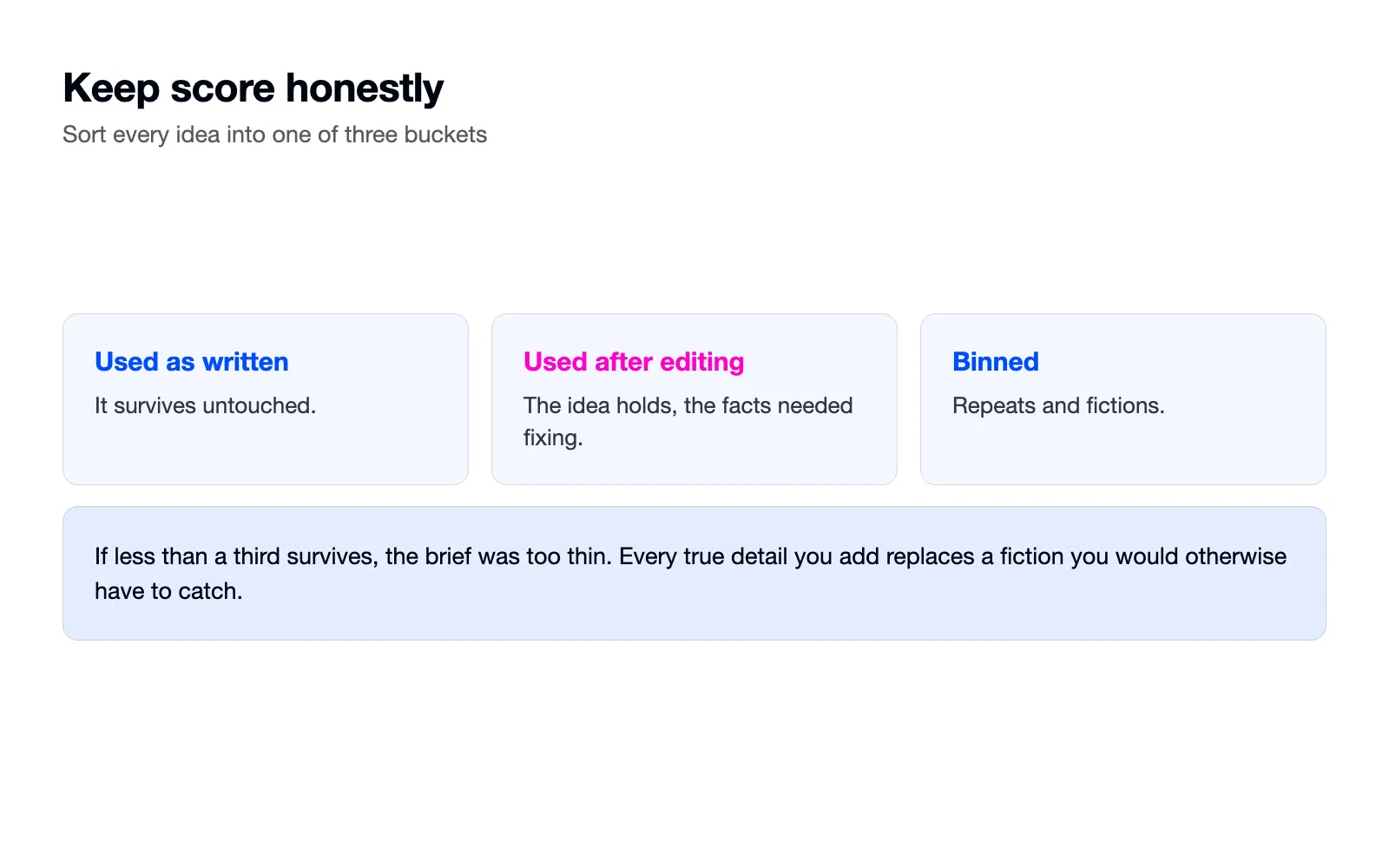
Keep the score honestly: used as written, used after editing, binned. If less than a third survives, the brief was too thin, because the model returns what you feed it, and three vague details in produce a month of vague ideas out.
The calendar is the safest place to let AI in, because no generated words reach a customer. Let it fill the grid, keep the knowing for yourself, and the planning hour gets lighter without the feed ever sounding like a machine.

Georgia May
CEO & Founder of Tea & Toast